 Email :
  Phone No:
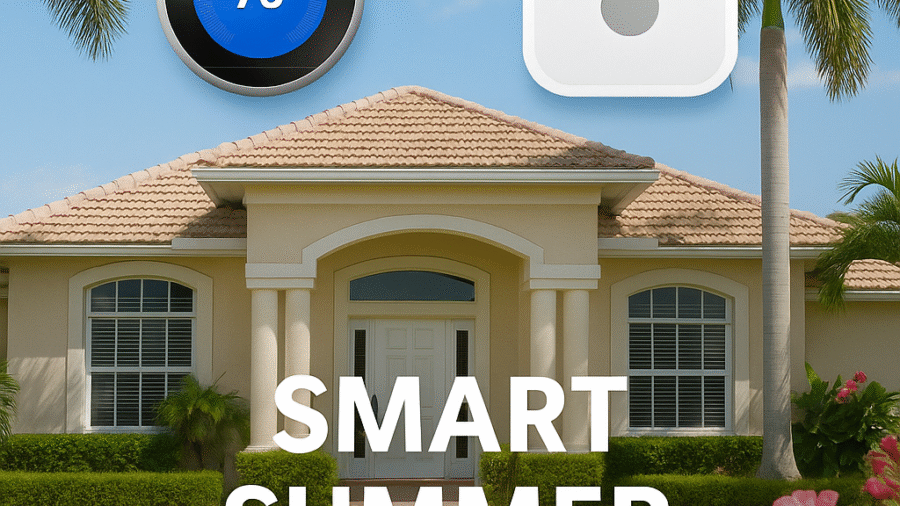
Why Humidity Matters More Than Temperature in Florida
In Southwest Florida, humidity is the real threat—not just the heat. Mold can grow in as little as 24–48 hours when indoor humidity exceeds 60%. High moisture levels also damage wood, warp furniture, ruin electronics, and worsen air quality.
- Keep indoor humidity under 50–60% (ideally closer to 45%)
- Set thermostat to 75°F when home, and no higher than 78°F when away
- Ensure your AC runs long enough to remove moisture—not just lower the temperature
- Use smart thermostats or hygrometers to track humidity levels
- Use fans, dehumidifiers, and keep doors open for airflow
Sources: Florida Department of Health | Quality Mold Solutions
Essential AC Maintenance & Smart Monitoring
1. Change Your AC Filter Monthly
- Replace filters every 30 days to prevent clogs and airflow restriction
- Use MERV 8 or higher filters for better dust and allergen control
- Helps your AC dehumidify more effectively and lower energy bills
2. Use Smart Thermostats With Humidity Alerts
- Smart thermostats can send alerts when humidity rises too high
- Ensure long enough run cycles to control humidity, not just cool the space
- Popular options: Nest, Ecobee, Honeywell, or external humidity sensors
Backup Power and Surge Protection: What Actually Helps
- Use a UPS (Uninterruptible Power Supply) to keep modems, routers, and cameras online during short outages
- Never plug a UPS into a surge protector or vice versa—it can disable protection features
- All UPS units include built-in surge protection; use standalone surge strips for other devices like TVs and chargers
Storm Monitoring and Smart Alerts—With Realistic Expectations
- Use apps like MyRadar, AccuWeather, or FEMA for accurate local alerts
- Test all smart sensors and notifications monthly
- Most smart devices won’t work without Wi-Fi. If you don’t have a cellular backup router, consider standalone, battery-powered alarms
Smart Leak Detection to Prevent Mold and Water Damage
- Install smart water leak sensors in high-risk areas (sinks, water heater, A/C drip pan, washer)
- Choose battery-powered models that still work during outages
- Some sensors trigger local alarms; others send phone alerts via smart hubs
- Advanced systems can include auto shut-off valves for plumbing
Recommended Brands: Moen Flo, Govee, Aqara, D-Link, Yolink
Energy-Saving Upgrades That Reduce Costs
- Apply UV-blocking film or thermal curtains on windows
- Use awnings, trees, or reflective roof coatings to reduce heat load
- Improve attic airflow with smart fans or passive ventilation
Source: Kiplinger
Power Shutoffs in Florida: What You Need to Know (2025 Update)
As of summer 2025, Florida still has no statewide policy to prevent electricity disconnections during heatwaves. FPL, Duke, and TECO can shut off service for non-payment—even during dangerous heat index days.
- No automatic protections for medically vulnerable or aging residents
- The federal PAUSE Act was introduced but not yet passed
- Some utilities offer hardship programs, but most residents remain unprotected by default
Source: The Invading Sea – April 8, 2025
Smart Support from Decoding Technology
At Decoding Technology, we help Florida residents—seasonal or full-time—install, optimize, and manage smart home solutions tailored for summer conditions.
- Smart thermostat & humidity control setup
- AC filter education & air quality assistance
- UPS & surge protection systems
- Smart leak sensors & energy-saving upgrades
Call or text 239‑944‑7446
Visit www.DecodingTechnology.com
